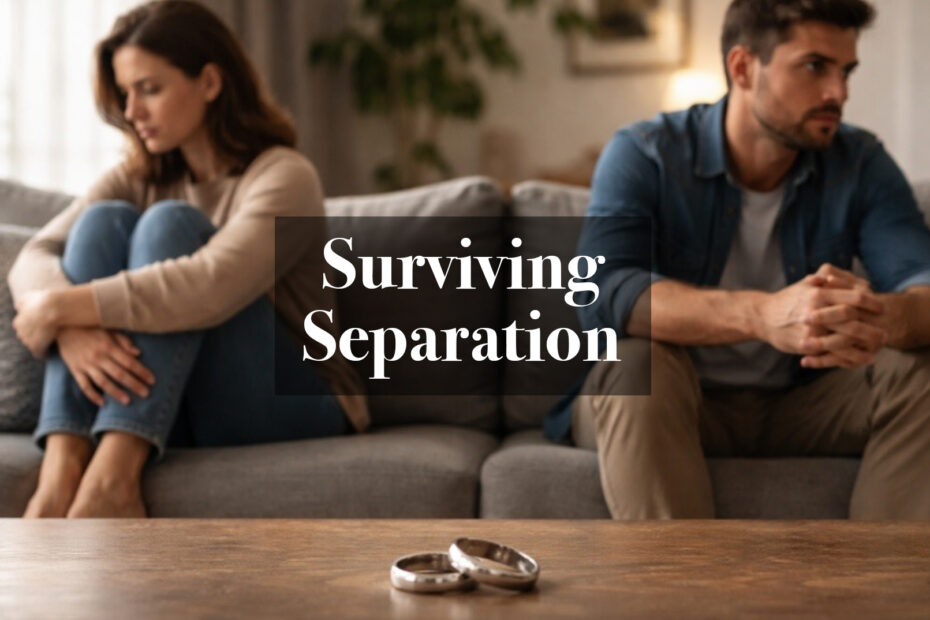
You wish it hadn’t happened – but it has. Well, life is like that. We don’t always get things right; relationships can break down, but we always have a choice about what we’ll do to survive, and about making a fresh start and a new beginning. You may feel as though you’re in free fall, and don’t know what to grab hold of. You’re full of pain and hurt and just want it to stop. You feel out of control, powerless and angry – everything seems meaningless, and you don’t know if you can bear it. The assumption here is that your partner has initiated the separation, but if it’s the other way around you may still experience many of the same things – with guilt thrown in.
The first and all-important thing is to learn how to survive; you have to get the hang of survival long before you’re ready to start analysing things or envisaging a new life.
When it comes to emotional pain, you can run but you can’t hide. Better to turn and face it, allow yourself to feel it (which is not the same as indulging it unnecessarily), and learn to push through it. But you’ll need a break from it sometimes too, by doing something recreational – even if you don’t feel much like it.
On occasions when you can’t get past feeling overwhelmed or desperate, talk to a male friend. Men usually know how to cut to the chase and help others feel back in control. They’re good at putting some masculine structure on strong feelings (where your own structure has become wobbly); feelings that shouldn’t just be sent underground, which need to be contained and “tamed”. If you don’t want to overburden your friends, make sure you do your emotional “homework” – don’t expect them to do it for you.
Is the separation permanent? The gut-wrenching stuff will not stop until this question is answered decisively. There has to be a definite end or a new beginning. The worst thing you can do is delude yourself about this. It’s a classic behaviour to refuse to let go of a failed relationship by hoping that your partner will change her mind – which only postpones the pain and draws out the whole process of grieving.
Idealising your partner and obsessing about her are classic signs of not accepting the reality of the situation. And don’t misread friendliness as a change of heart; it’s usually just their way of not “rubbing salt into wounds”. Have the courage to stick with what you know you have to do; you’ll soon get some tone into your emotional muscles.
Find ways of relaxing, definitely stay amongst people (withdrawing socially is asking for trouble), keep talking, and avoid overusing alcohol. Learn to control self-defeating thoughts. Stick to your decisions. Seriously consider seeing a counsellor, psychologist or pastoral professional – especially if you feel unsafe or start experiencing suicidal thoughts (which is entering dangerous territory, and needs to be taken seriously).