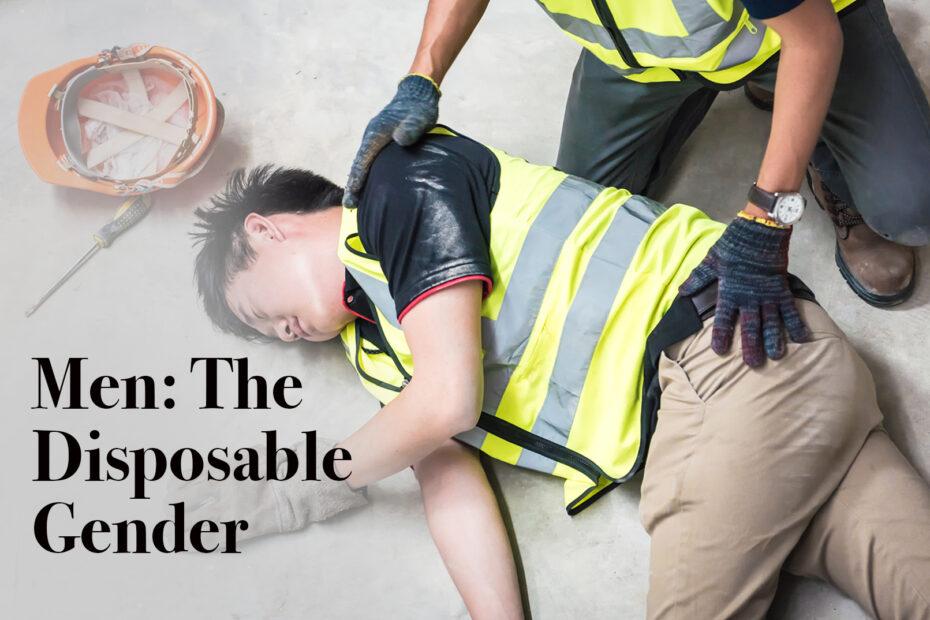
Australia and the United Kingdom are prosperous societies with strong institutions, freedoms, and relative stability. But what is scarcely ever acknowledged is that none of this would mean anything without the labor of ordinary workers – workers prepared to pay a very high price for our “success”; workers who, in a whole range of occupations and ways, are prepared to accept some measure of disposability.
It is men who take on roles where danger, injury, and health burdens are disproportionately concentrated. Too often, these costs are invisible in public debates. Workplace fatalities and harm to health (including mental health) are two of the starkest examples. Here is the statistical picture for Australia and Britain:
Australia
According to Safe Work Australia, 200 workers lost their lives in work-related traumatic incidents in 2023. Of these, around 95% were men (189 of 200). This continues a stubborn trend in which men disproportionately bear the risk of workplace fatalities.
The sectors with the highest number of deaths were:
• Transport, postal & warehousing – 51 fatalities
• Construction – 45 fatalities
• Agriculture, forestry & fishing – 27 fatalities
Vehicle incidents remain the single most common cause of death (around 42% of cases), followed by falls from height (about 15%). Non-fatal harm is also widespread: in 2022–23 there were about 139,000 serious workers’ compensation claims, with mental health conditions making up about 11%. The median time off work for mental health cases was more than five times longer than for many other injuries.
Great Britain
The Health and Safety Executive (HSE) recorded 124 worker deaths in the year 2024–25. This represents a decline from 138 in the previous year, but the burden remains heavy. As in Australia, men make up the overwhelming majority of these fatalities.
The most hazardous sectors mirror those in Australia:
• Construction – 35 fatalities
• Agriculture, forestry & fishing – 23 fatalities
Falls from a height were the leading cause of death (around 35 fatalities, more than a quarter of the total). Overall, 1.7 million people were suffering from work-related ill health in 2023–24, with about 604,000 self-reported non-fatal injuries.
Comparing the Two Nations
At first glance, the raw numbers – 200 deaths in Australia versus 124 in Britain—seem puzzling, given the UK’s much larger workforce. But absolute numbers can mislead. Australia’s industries, especially transport, mining, and remote agriculture, expose more workers to high-risk environments. Rates per 100,000 workers are a more accurate way to compare, though definitions and reporting standards differ between nations.
Still, the pattern is unmistakable: men are most represented in the high-risk industries like construction and agriculture which consistently account for a disproportionate share of deaths.
The Invisible Cost
Every death is more than a statistic – it is a family shattered and a community diminished. Yet, while society mobilises to debate issues of net-zero, the cost of living, or gender equality, the routine loss of male lives at work receives little if any real attention. The cultural expectation that men accept risk as part of their duty – to family and to society – normalises their disposability and perpetuates its invisibility.
For a society to be truly decent and equitable, recognition must extend to those who carry the bulk of these risks. That means safer workplace practices and protections for health, attention to both physical and mental health, health funding for male friendly services proportionally set at levels that take men’s health seriously, and a cultural shift that values men not as disposable, but as human beings whose lives and well-being matter.
Perhaps most importantly, men need to be valued for their preparedness to expose themselves to all the hazards and risks that go with their socially expected and taken for granted roles, instead of being continually disparaged and criticized by those who wouldn’t dream of doing the ‘dirty work’ foisted on men.
References
• Safe Work Australia (2024). Workplace fatalities report.
• Health and Safety Executive (2025). Work-related fatal injuries in Great Britain.
• HCAMag.com (2024). Australia logs 200 workplace fatalities in 2023.
• Press release, UK Health and Safety Executive (2025).