However you choose to frame it, grief is not the kind of experience you would go looking for: a confusion of painful emotions, physical upheaval, and having your vulnerability on public display. But grieve we must and will, because grief follows most significant losses in our lives—especially the loss of someone we have been strongly attached to. There is simply no avoiding it unless we block out our whole capacity to feel—our capacity to enjoy living and loving. Trying to keep grief at bay is merely to postpone the inevitable, and it invites a more overwhelming and difficult experience later on; one that can have serious consequences for psychological wellbeing, physical health, and relationships (Stroebe, Schut, & Stroebe, 2007; Worden, 2018).
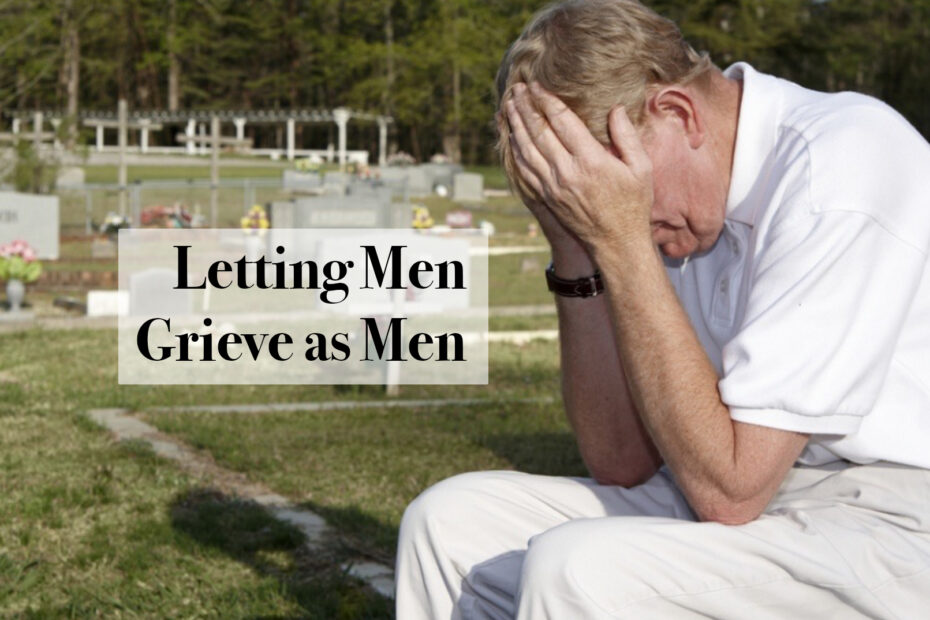
Every person will grieve in his or her own individual way. It is important to recognise, however, that men generally grieve and mourn their losses differently from women. Women are typically more adept at seeking out support for themselves and supporting each other. They often relieve emotional pain through open expression and verbalisation in the company of others. Men, by contrast, may have to choose more consciously to allow grief-related emotions to surface, and will usually need a private or “safe” place—such as a cemetery or a familiar solitary setting—in which to experience them and the healing that brings (Doka & Martin, 2010). Time spent alone in the natural environment, where reflection and emotional vulnerability can occur without social pressure, has also been shown to be particularly restorative for many men (Richardson & McKenna, 2014).
A characteristically male—and often effective—way of responding to grief is by “pushing emotions outward” into actions and activities, frequently through ritualised or purposeful behaviour. Men commonly create, build, repair, or engage in symbolic acts to mark, honour, or commemorate the death of a person and the loss of shared roles and meanings. Such activity-based and instrumental approaches to grieving are not avoidant by default; rather, they represent a different but legitimate pathway toward meaning-making and emotional integration (Martin & Doka, 2015; Stroebe & Schut, 1999).
At the same time, however men choose to engage with their grief, there must be room to “take a break” from its intensity. Neither ignoring grief nor remaining immersed in it continuously best facilitates healing. Periods of oscillation—moving between confronting grief and attending to the practical demands of life—are central to adaptive adjustment following bereavement (Stroebe & Schut, 1999). Attending to new tasks, altered roles, and changes in relationships is not a betrayal of grief but an essential component of recovery.
Contrary to the popular view that men cope more poorly than women with bereavement, research suggests that men fare worse only when they are deprived of adequate social support. When such support is available, gender differences in bereavement outcomes largely diminish (Stroebe et al., 2001; Umberson, Thomeer, & Williams, 2013). While men may be more inclined toward solitude and reflection in their grieving process, they nevertheless benefit greatly from the presence and support of others. Often it is attentive, non-intrusive presence—rather than extended conversation—that proves most helpful (Doka & Martin, 2010).
Men may approach the task of mourning differently from women, but if men are allowed to grieve as men, the overwhelming majority will manage well.
References
Bonanno, G. A. (2004). Loss, trauma, and human resilience: Have we underestimated the human capacity to thrive after extremely aversive events? American Psychologist, 59(1), 20–28.
Doka, K. J., & Martin, T. L. (2010). Grieving beyond gender: Understanding the ways men and women mourn (2nd ed.). New York, NY: Routledge.
Martin, T. L., & Doka, K. J. (2015). Men and grief: New directions in theory, research, and practice. Bereavement Care, 34(2), 47–51.
Richardson, E. A., & McKenna, J. (2014). Walking towards wellbeing: The salutogenic effects of outdoor physical activity. Journal of Outdoor Recreation and Tourism, 7–8, 1–10.
Stroebe, M., & Schut, H. (1999). The dual process model of coping with bereavement. Death Studies, 23(3), 197–224.
Stroebe, M., Schut, H., & Stroebe, W. (2007). Health outcomes of bereavement. The Lancet, 370(9603), 1960–1973.
Stroebe, M., Stroebe, W., & Schut, H. (2001). Gender differences in adjustment to bereavement. Review of General Psychology, 5(1), 62–83.
Umberson, D., Thomeer, M. B., & Williams, K. (2013). Family status and mental health. Handbook of the Sociology of Mental Health, 405–431.
Worden, J. W. (2018). Grief counseling and grief therapy (5th ed.). New York, NY: Springer.