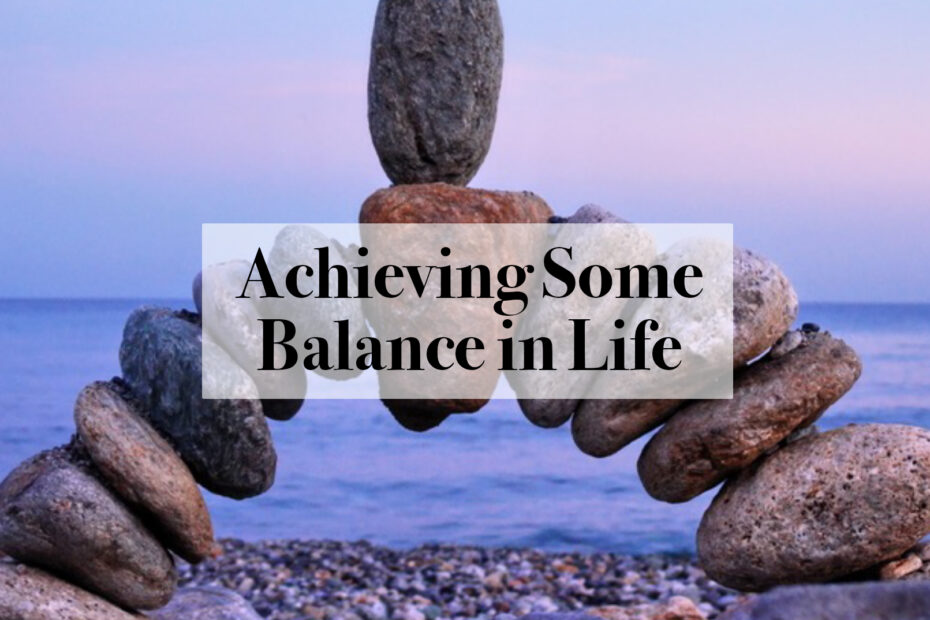
No man “on a mission”, in pursuit of a highly motivating project, wants to be bothered with other things. Least of all with any milksop mollycoddle insinuation that hard work and enterprise deprive the world of sensitive house fathers. But though our projects are important to us, we do need to think about achieving some degree of balance in life. Tedious as it may sound, there are other important elements of life – like exercise, relaxation, relationships and family, and our psychological and spiritual development – all of which are essential for sustaining our health and wellbeing. Fatigue, a high level of stress, diminishing quality of relationships, a decline in creative output, and the beginning of psychological difficulties may all be signs that we have yet to address the need for balance.
If we become too absorbed in our projects, vitally important though they may be, we can end up functioning out on the periphery of ourselves – out of touch with the part of us that is most perceptive and capable of deep feeling, pleasure, and simple reflective satisfaction. We can become like tourists in life: taking snap shots of things without really fully exploring, comprehending or experiencing them. We can become disconnected from our capacity for reading important emotional cues and signals in our relationships. Desensitized to the needs and feelings of others, we can become alienated from the very ones all our hard work may be meant to ultimately benefit.
The critical test is to step back from our projects and see how long we can bear it; to see if we have the capacity to relax, relieve stress, and focus on other priorities – especially relationships, without undue agitation, and with genuine and patient interest. If we can’t, it’s a clear indication that we may need to rethink and readjust our priorities.
Though what constitutes balance will be different for each person, working out what may need to be given more attention, and in what way, will invariably require thoughtful, reflective and genuinely honest assessment.
One suggestion is to draw a bar graph, using the different height of a number of bars to indicate important areas of your life, and the current relative attention they receive. This can help put things in perspective and indicate what needs attention and how much. The bars don’t necessarily have to achieve equal height. Rather, they need to achieve a relative height that fits with what you honestly and realistically consider to be the kind of balance that is healthy for you and is sustainable over time. Use a diary or calendar to indicate dates for periodic review.
The thing to remember about balance is that it isn’t a constant; it comes and goes as things change in life – so it needs to be periodically reassessed. But it’s well worth the effort and, far from detracting from our projects, can even breathe new life into them.