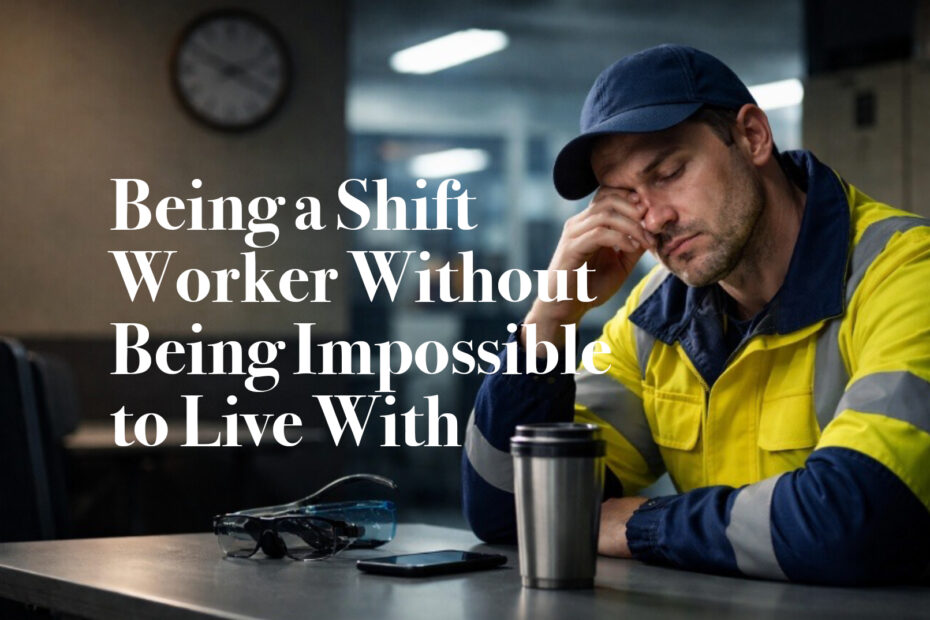
If you are one of the fortunate people who have the luxury of working “nine to five” spare a thought for those who are busy at work while you’re settling into your favourite TV show, experiencing nice recreation, or tucked up in bed. Shift workers man the “boiler rooms” of industry and our essential services, often doing the most thankless tasks and exposing themselves to a variety of occupational hazards in the process. But what is often not realised is the negative effect that shift work can have on their relationships, and psychological wellbeing and physical health.1,2,3,4
Constant sub-standard sleep and being out of phase with the social and family life that occurs during daylight hours, can create some unexpected “chain reactions”. Sleep disturbance often leads to irritability, a low tolerance threshold, and increased anger and tension in personal relationships.2,3,4 It is also commonly associated with changeable and low mood, and higher than normal levels of stress.2,3,4 When these are “medicated” with alcohol (which men commonly do), short-term relief often gives way to longer-term problems. Alcohol aggravates the symptoms of low mood, interferes with the quality of sleep, and covers over but doesn’t resolve the problem of stress.5
Diminished quality time and positive emotional connections with partner, children, and friends, can also have a number of linked effects. Research has shown that relationships and social activities serve to help us stay emotionally healthy; they actually boost the body’s immune system, act as a buffer against the effects of stress on health, and are protective of psychological wellbeing.6,7 Becoming isolated and cut off from friends and social support is associated with poor psychological wellbeing and higher levels of chronic illness. 6,7
If you’re a shift worker and you want to maintain your psychological wellbeing and physical health, and keep health in your relationships, you may need to employ a number of counteractive measures:
- Make it a top priority to get into the best pattern of sleep that you can. If you are really struggling, you may need to consider sleep improvement strategies or sleep therapy (talk to a counsellor or psychologist about this).2,3,4
- Postpone discussing thorny issues with your partner until you are well slept and not too irritable.2,4
- Set aside time and create opportunities for strengthening and enjoying your relationships and social life.6,7
- It’s natural to want to cram pleasure into your “off time,” but decide not to do that in a way that undermines your psychological wellbeing, health or relationships.
- Try to limit your alcohol intake to four standard drinks a day.
- Be sure to eat healthy food, and exercise whenever you can. Both will help your psychological wellbeing and health a lot.8
If you find yourself needing help with sleep, stress management, a flat mood, anger, relationship difficulties, or the overuse of alcohol, don’t wait for the problem to get out of hand. Take yourself off to a skilled counsellor, psychologist, or pastoral care professional. If it’s ages since you had a proper medical check-up and blood work done, do that too. And remember, medication is no quick fix for sleep or psychological issues; lifestyle and self-management choices are nearly always much more important.
References
1. Soltanzadeh, A., et al. (2024). Investigating the relationship between shift work schedule and sleep quality, health and safety among healthcare workers. Scientific Reports.
2. National Institute for Occupational Safety and Health. (2020, March 31). Impacts on families. In NIOSH training for nurses on shift work and long work hours. Centers for Disease Control and Prevention.
3. Chang, M. J., et al. (2024). The relationship of shift work disorder with symptoms of depression, anxiety, and stress. Sleep Health, 10(2), 216-223.
4. Harris, R., et al. (2024). Sleep, mental health and physical health in new shift workers: A systematic review. Sleep Medicine Reviews, 79, 102016.
5. Gardiner, C., Weakley, J., Burke, L. M., & Roach, G. D. (2025). The effect of alcohol on subsequent sleep in healthy adults: A systematic review and meta-analysis. Sleep Medicine Reviews, 80, 102030.
6. U.S. Department of Health and Human Services, Office of the Surgeon General. (2023). Our epidemic of loneliness and isolation: The U.S. Surgeon General’s advisory on the healing effects of social connection and community.
7. World Health Organization. (2025). From loneliness to social connection: Charting a path to healthier societies: Report of the WHO Commission on Social Connection.
8. Noetel, M., et al. (2024). Effect of exercise for depression: Systematic review and network meta-analysis of randomised controlled trials. BMJ, 384, e075847.